Wednesday, June 11, 2025

Sunday, June 8, 2025
Testing Study Methods
Question: Which Study Method Best Improves Memorization of 20-Digit Serial Numbers?
Purpose: To evaluate which study method helps best memorize and recall long numerical sequences under timed conditions. The methods being tested are listed below:
Mental Repetition – Reading the sequence over and over in your head
Verbal Repetition – Verbally repeating the digits
Chunking – Dividing into smaller logical groups
Method of Loci – Creating a mental “memory palace” with digit chunks placed in locations
Active Recall – Repeatedly testing oneself during the 2 minutes by covering the sequence and trying to recall
Procedure:
For each study method:
Show the participant 1 unique randomly generated 20-digit number
Give them 2 minutes to memorize the number using that assigned method
Complete 10 multiplication problems as a distraction
1 minute to recall and write down as much of the 20-digit number as they can on a blank sheet
Results
Saturday, May 31, 2025
The Best Study Methods
*The following studying methods are not ranked in any specific order*
Active Recall
Active recall involves testing yourself instead of passively reading or highlighting. It strengthens memory by actively retrieving information from your brain.
How to do it: After attempting to study information, try to write down everything you remember without referring to notes. Once you finish writing what you remember, refer back to your notes and study what information you missed. Repeat this until you know all of the information.
Spaced Repetition
Spaced repetition is all about reviewing material over increasing intervals of time. This method only works if you have a significant amount of time to study the information.
How to do it: Review new flashcards/information daily, then gradually reduce how often you study the information you know well.
Interleaved Practice
Instead of studying one subject in big blocks, mix up different topics. This method improves your ability to distinguish between concepts and apply knowledge flexibly.
Example: When studying for math, mix algebra, geometry, and calculus problems instead of doing them in separate chunks.
Pomodoro Technique
This method helps you focus in short bursts with frequent breaks, preventing burnout and boosting productivity.
How to do it: Study for 25 minutes, then take a 5 minute break. After four cycles, take a longer 15-30 minute break.
Elaborative Interrogation
Ask yourself “why” and “how” questions as you study. Connecting new information to what you already know makes it more meaningful and easier to remember.
Example: When studying history, ask: Why did the Cold War start? How did it shape global politics?
Mind Mapping
A mind map is a visual way to organize and connect ideas. It helps you see the big picture and how concepts relate to each other.
How to do it: Pick a main idea, put that term in the center and branch out to key subtopics to show relationships between ideas.
Self-Explanation
Teach the material to yourself out loud. Explaining concepts in your own words helps identify gaps in understanding and reinforces learning.
Example: After reading about photosynthesis, pretend you’re teaching it to a friend. If you get stuck, go back and review, then try again.
SQ3R Method
SQ3R stands for: Survey, Question, Read, Recite, and Review.
How to do it:
Survey: Skim the chapter
Question: Turn headings into questions
Read: Read actively to find answers
Recite: Summarize out loud from memory
Review: Go back and reinforce information
Visualization Techniques
Turn abstract information into mental images. This is especially helpful for processes, systems, or spatial subjects.
Example: Visualize the steps of the water cycle. Picture evaporation, condensation, and precipitation, etc.
Method of Loci
This method involves associating the information you want to remember with specific locations in a familiar place like your home. By mentally placing information in these locations, you can "walk through" your memory palace to recall details in order.
Example: If you're trying to memorize the steps of mitosis, you could visualize each phase happening in a different room of your house. Then, walk through the house mentally to recall the events in order.
The Science of Forgetting & How to Avoid It
Why do we forget things?
The brain is constantly taking in information—every sound we hear, word we read, etc. To avoid becoming overwhelmed, the brain filters out what it considers "unimportant." This is selective memory–the brain stores what seems useful or emotionally significant and forgets the rest.
The Role of the Hippocampus
The most important brain structure involved in storing memories is the hippocampus. This structure is like a filter for memories–it helps to decide which experiences get transferred from short-term to long-term memory based on importance.
Attention
Before your brain can store information, it needs to pay attention and encode the information. That’s why multitasking during studying can make you forget what you just learned. Without focus, information never makes it to long-term storage in the first place, which could be the primary reason you do not remember the material you studied.
The Pros of Forgetting
Forgetting can be extremely frustrating when you know you need to remember specific information, but forgetting is important for human function. If you could remember every single thing that you’ve ever heard, seen, or done—it would be more harmful than productive. Forgetting helps the brain stay organized by keeping only what it thinks we need.
Avoid Forgetting
While it is not possible to stop forgetting entirely, there are ways that can help your brain hold onto information longer. Of course, studying the information is necessary to remember something, but there is one thing that can make studying much more productive–MAKE IT MATTER TO YOU. This can be done by connecting what you're learning to your own life or interests, because your brain is more likely to remember things it finds meaningful.
Friday, May 30, 2025
The Brain's Role in Memory
The Brain
The brain is a 3-pound organ made up of billions of neurons that communicate through electrical and chemical signals. It contains many different specialized regions, each playing a role in processing and/or storing memories.
Brain Structures Involved in Memory
Hippocampus
Responsible for turning short-term memories into long-term ones and plays a critical role in spatial memory i.e. remembering directions to get home. Lacking a hippocampus would prevent you from creating new memories like Lucy in the movie 50 First Dates.


Amygdala
The amygdala associates your memories with emotion. This almond-shaped structure helps you remember experiences that made you feel emotions like fear, joy, anger, or excitement. Emotional content helps strengthen memory encoding.

Prefrontal Cortex
Located in the frontal lobe, the prefrontal cortex helps with working memory—extremely short term memory. It allows you to hold information temporarily and plays a role in attention, decision-making, and planning.

Cerebellum
The cerebellum mostly contributes to controlling balance and coordination, but it also responsible for procedural memory—the kind you use when naturally doing things like knowing how to ride a bike.

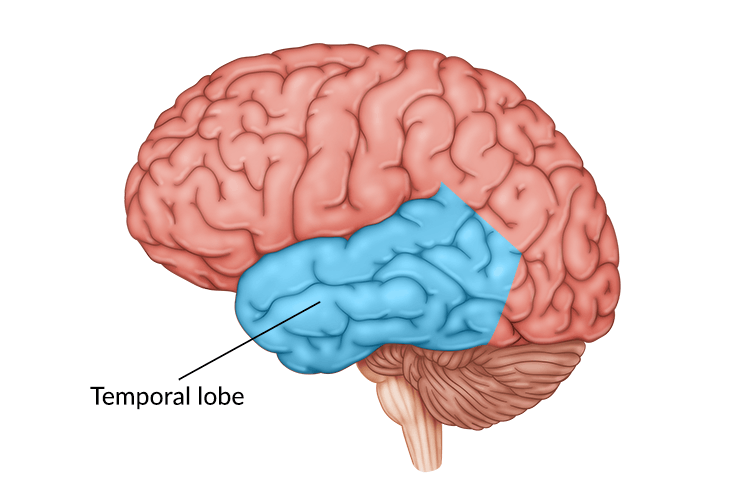
Temporal Lobe
The temporal lobe helps store and retrieve long-term declarative memories—facts and events you can consciously recall. It also processes auditory information, which helps you remember sounds and language.
Memory Formation
Different parts of the brain handle each stage of memory formation.
Memory formation happens in three main stages:
Encoding – Taking in information
Storage – Keeping that information over time
Retrieval – Accessing the information when needed
Role of Sleep
The brain strengthens your memories during deep sleep–your hippocampus replays the day’s experiences, helping transfer them into long-term memory.

Subscribe to:
Comments (Atom)
-
Hello everyone! My name is Thomas Easterday, and I’m a senior at Egg Harbor Township High School. Next year, I am planning to attend Cornel...
-
The Brain The brain is a 3-pound organ made up of billions of neurons that communicate through electrical and chemical signals. It contains ...
-
From the earliest oral traditions to modern-day study tricks, the way we study and remember has come a long way. Throughout history, people ...

